Mjollnir
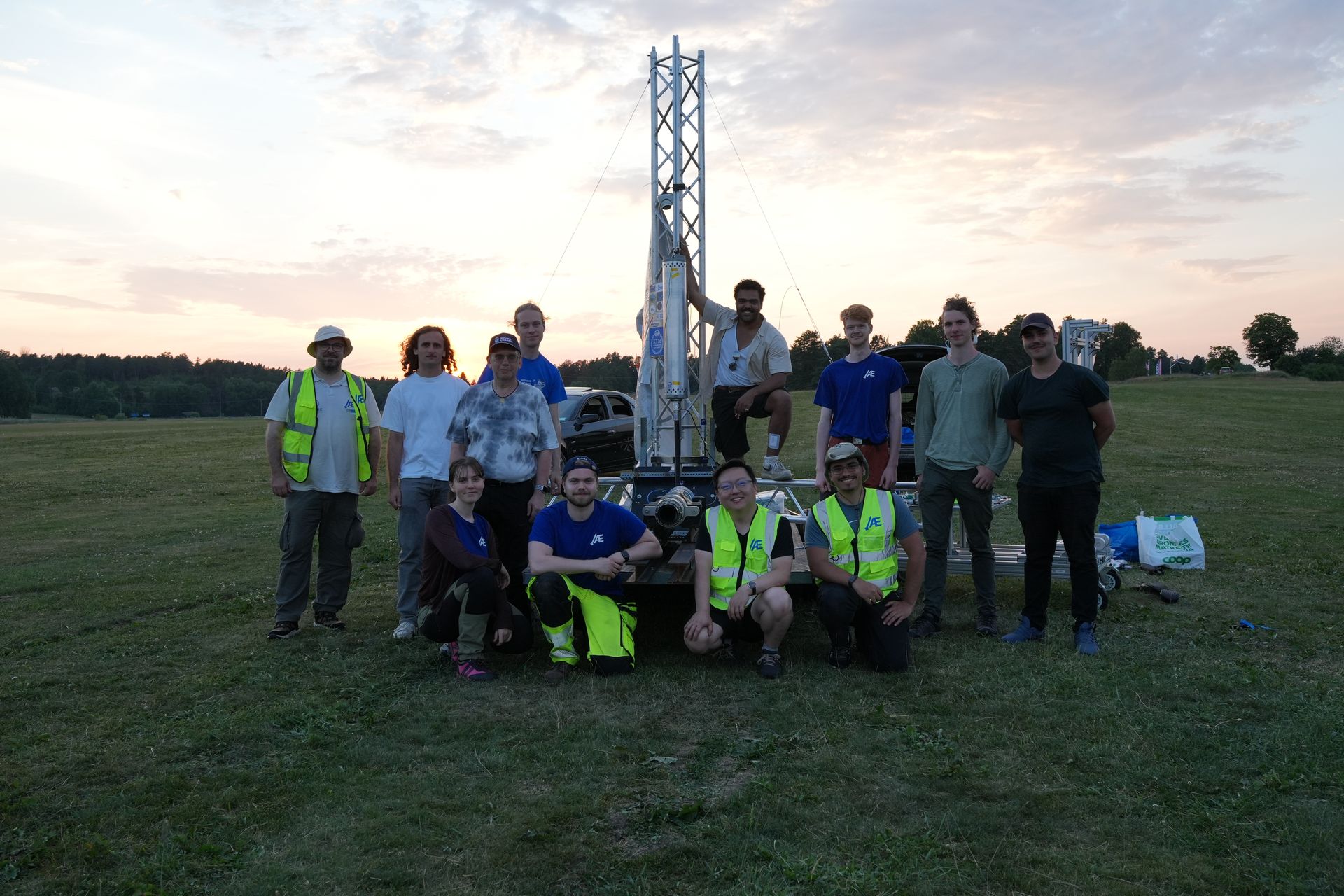
Mjollnir is ÆSIR’s third major rocket project with our most ambitious goal of reaching 10+km in altitude. This is our biggest rocket to date, standing at around 4.5 meters with an outside diameter of 16 cm. The higher altitude poses many interesting challenges for our team when it comes to communication with the rocket, recovery of it and of course the rocket engine itself.
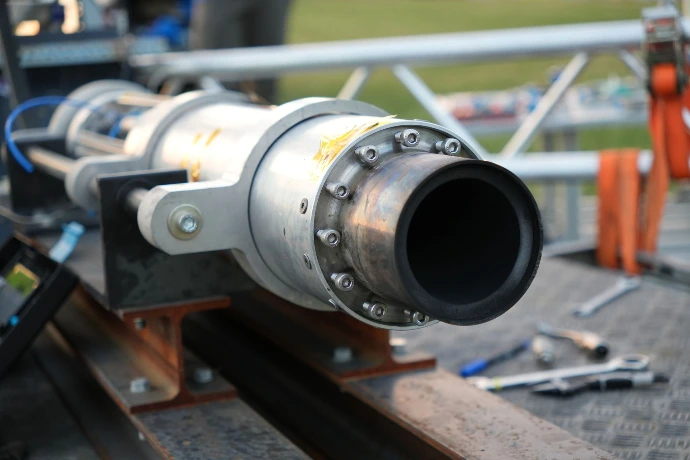
The Sindri engine is, just as for previous ÆSIR projects, a hybrid. This means it uses liquid oxidizer (N2O) and solid fuel (Paraffin) as propellant. It is designed based on the same concept as Sigmundr, our previous rocket, but has a significant increase in complexity in order to increase combustion efficiency and to reach the desired altitude.
The higher altitude makes communication between Mjollnir and Ground Station more difficult which forces our Electronics Team to come up with new ideas in order to retrieve footage and telemetry data.
A new recovery system containing two chutes, a drogue and a main, has been developed in order to safely recover the rocket in one piece. The two chutes are a necessity for the system as a response to the high altitude. First the drogue-chute is deployed to slow the fall to a few kilometers, it’s only then that the main is deployed to slow the rocket down significantly until touchdown.
As of July 2026, Mjollnir has reached the final stages of launch preparations with the help of countless students and partners. With several nominal engine static fire tests and separation tests of the recovery module the team prepares for a launch in October of 2026 in Poland.
Key features of Mjollnir
What makes Mjollnir unique in a world of ever-evolving rocket complexity?
Paraffin pride
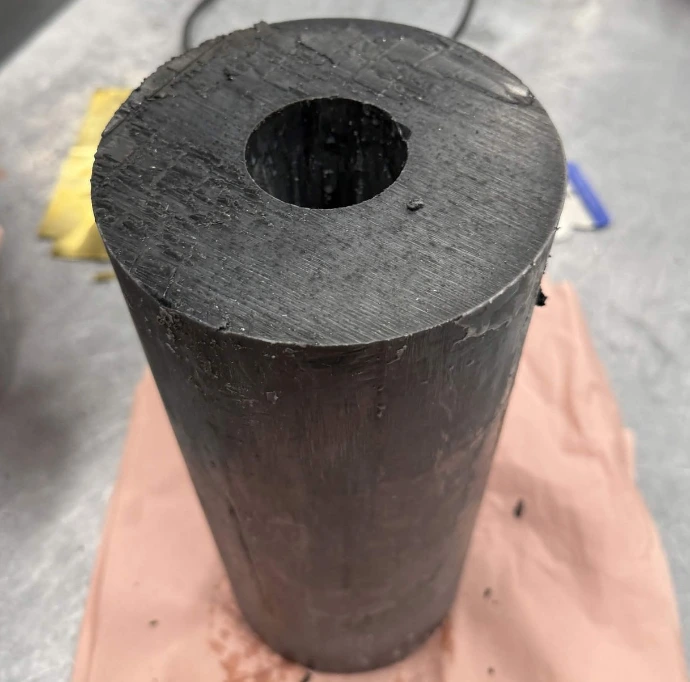
The Sindri engine uses a paraffin-based fuel grain which poses a number of challenges. The size of the grain makes the manufacturing process a tedious but rewarding science. The work our propellant team has put, deep diving into research on polymers, has resulted in a one-of-a-kind method that produces the fuel grain we use today.
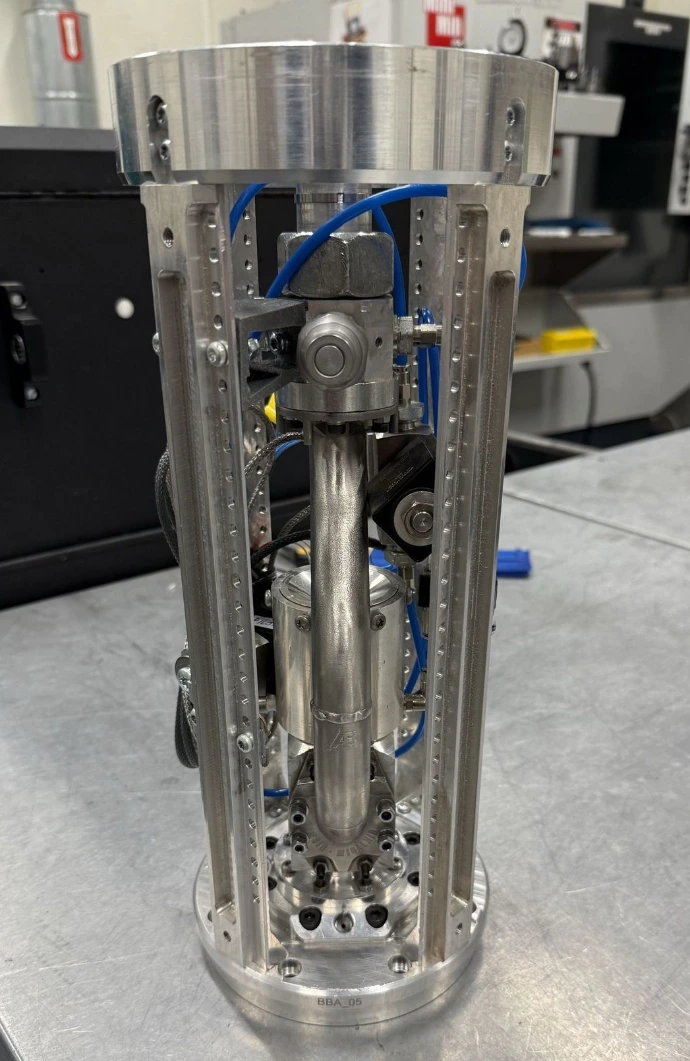
Custom-built pneumatic valve
The engine powering Mjollnir uses a custom designed and manufactured pneumatic valve to improve opening speed compared to a ball valve typically used.
This in turn tests our design and manufacturing abilities and are proud to have done so on KTH campus.

Swedish history in the making
The Mjollnir project, as of 2026, is considered the largest civilian rocket built in Sweden with the most powerful engine nationally to date.